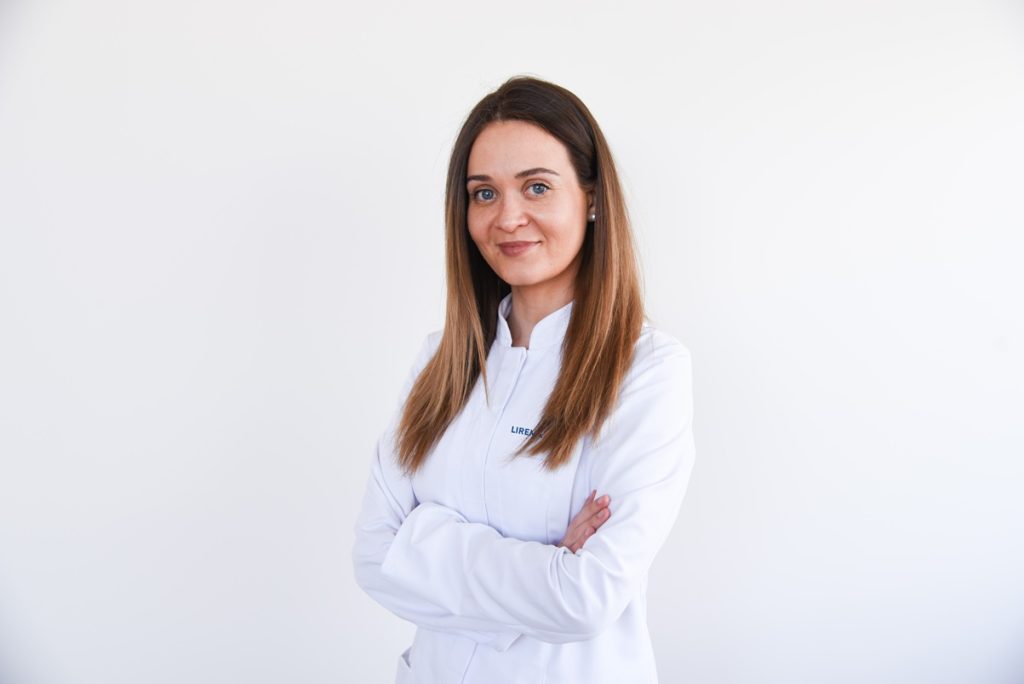
People who use glasses or contact lenses often see laser vision correction as just another alternative, but is the procedure suitable for everyone? Ophthalmologist and microsurgeon Eglė Jankauskė from Lirema Eye Clinic explains who this procedure is recommended for and what is important to know when choosing it.
According to the doctor, there are many different methods available on the market. While they do not differ in the final result, they vary in healing time, comfort, and the technology used.
“Methods are divided into surface correction—such as SURFACE (SmartSurfAce, LASEK, or transPRK)—and deeper-layer corneal procedures that offer faster healing and less discomfort, such as FEMTO (FS-LASIK) or SMILE PRO. If several methods are suitable based on eye and overall health condition, the patient can choose the most acceptable one,” says Jankauskė.
What Determines the Choice of Method
Laser vision correction is selected individually, depending on the individual’s vision, eye condition, lifestyle, and financial situation.
“Laser eye surgery is recommended from the age of 18, when vision has been stable for at least a year, with a refractive error from 12 to +3 diopters, and not exceeding safe limits for surgery. If diopters are higher, we can offer other advanced correction methods,” the doctor notes.
According to E. Jankauskė, it is important that corneal thickness is sufficient and that the patient does not suffer from eye diseases or other conditions that could affect the outcome.
“When performing laser eye surgery, we strive for the best possible visual result so that the patient enjoys excellent vision for many years. Therefore, it is essential to ensure there are no additional factors that could influence the outcome,” emphasizes the microsurgeon.
After a thorough examination, the patient is presented with the most suitable correction options. For those with high astigmatism or thin corneas, when FEMTO (FS-LASIK) and SMILE PRO are not suitable, a surface method such as SURFACE is recommended.
“Depending on work specifics, patients should plan 3–5 days of downtime until the epithelium regenerates. During the first days, tearing and light sensitivity may occur, and vision stabilizes over several weeks,” the doctor explains.
For Those Saving Time and Avoiding Discomfort
Patients eligible for FEMTO (FS-LASIK) or SMILE PRO methods return to their normal routine almost immediately—the healing is very fast, and the discomfort is minimal or nonexistent.
“After choosing a faster method, people often return to work the very next day. SMILE PRO is the newest and most comfortable method—minimally affecting the cornea, causing almost no dry-eye symptoms, and allowing immediate return to daily activities, including contact sports,” E. Jankauskė highlights the benefits.
According to her, to avoid the limitations in daily activities previously caused by more complex surgical interventions, rapid recovery is now considered one of the most important patient expectations.
“Many patients considering laser eye surgery aim not only for excellent visual results but also for the ability to resume their daily rhythm as quickly as possible. A fast-paced lifestyle, professional responsibilities, and active leisure mean that a long recovery period becomes a significant obstacle, so methods with minimal postoperative discomfort are increasingly chosen,” E. Jankauskė observes.
Anyone considering laser eye surgery is first advised to attend a consultation and undergo a detailed examination.
“The most suitable method is always chosen only after a comprehensive eye evaluation—assessing corneal surface, thickness, refractive stability, overall eye and general health, and the patient’s lifestyle. Only then can we determine which method is safest and most effective for that individual,” she concludes.
Find out whether laser vision correction is suitable for you by filling out a free questionnaire.