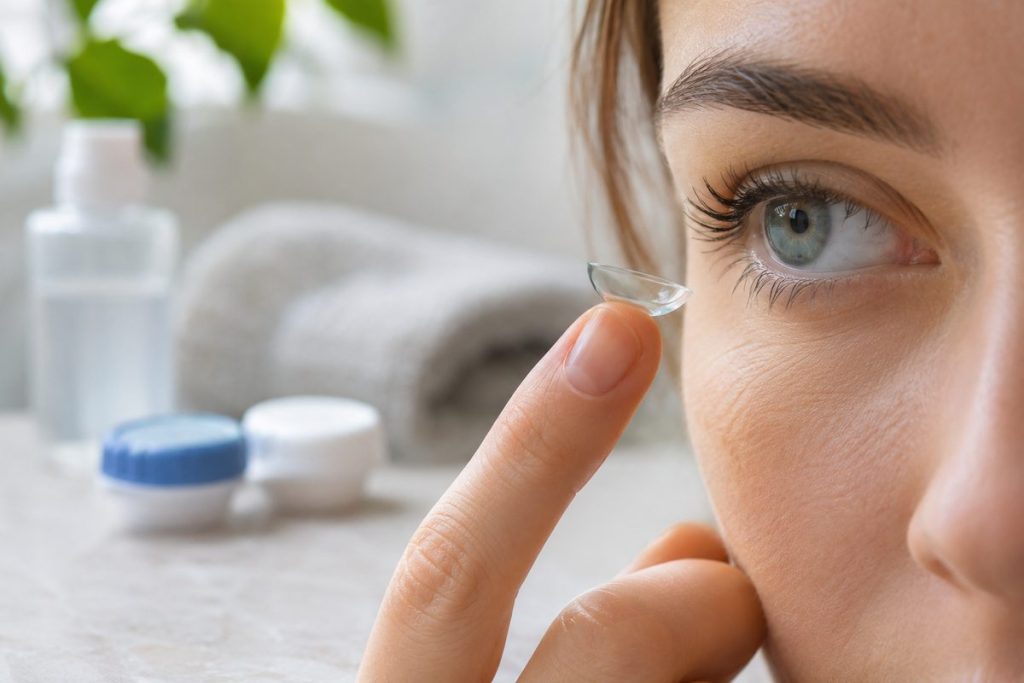
Contact lenses provide clear vision without glasses, but not everyone realises that even small mistakes in their use can have serious consequences for eye health. Falling asleep with contact lenses, taking a shower without removing them, or wearing them just a few days longer than recommended may seem harmless. However, eye care specialists warn that these everyday habits can increase the risk of corneal damage, inflammation, and infections. So, which seven mistakes should even experienced contact lens wearers avoid?
Contact lenses are a convenient way to correct vision. However, unlike glasses, they come into direct contact with the eye’s surface. Proper hygiene, following the recommended wearing schedule, and regular eye examinations are therefore essential for maintaining healthy eyes.
1. Sleeping with Contact Lenses – Even for a Short Nap
One of the most common mistakes is falling asleep without removing contact lenses. Some people believe that a short afternoon nap, or even one night of sleep with lenses, cannot cause significant harm.
However, sleeping with contact lenses increases the risk of corneal infections. Even a single occasion can increase the likelihood of microbial keratitis, a potentially serious inflammation of the cornea.
For this reason, contact lenses should be removed before sleeping, unless an eye care specialist has specifically prescribed lenses approved for extended wear.
2. Wearing Contact Lenses Longer Than Recommended
If contact lenses are designed for daily use, they should not be reused the following day. For two-week or monthly lenses, it is essential to follow the replacement schedule recommended by the manufacturer and eye care specialist.
Nevertheless, some people only replace their lenses when they begin to experience discomfort. This is a risky approach. Even if a lens appears clean and feels comfortable, microorganisms can accumulate on its surface. Wearing contact lenses beyond their recommended replacement period increases the risk of eye irritation and infections.
3. Showering or Swimming with Contact Lenses
Water and contact lenses are not a safe combination. This applies not only to swimming pools but also to showers, lakes, the sea, and even tap water. Water may contain microorganisms, including Acanthamoeba, which can cause a serious corneal infection that is difficult to treat.
Contact lenses can trap microorganisms against the surface of the eye, increasing the risk of infection. Therefore, contact lenses should never be rinsed with water and should be removed before swimming or showering.
4. Topping Up Contact Lens Solution Instead of Replacing It
Another common mistake is adding fresh contact lens solution to the old solution remaining in the lens case. Although this may seem like a way to save money, the practice reduces the effectiveness of disinfection and can create favourable conditions for microorganisms to multiply.
Fresh, appropriate contact lens solution should be used every time lenses are stored in their case. The lens case itself must also be properly maintained and replaced regularly.
5. Ignoring Dry Eye Symptoms
If your eyes become red, irritated, or feel gritty towards the end of the day, or if you cannot wait to remove your contact lenses, it does not necessarily mean that your eyes are simply tired. These symptoms may be associated with dry eye syndrome, poorly fitted contact lenses, or an unsuitable wearing schedule.
Discomfort is particularly common when working at a computer, as people tend to blink less frequently, causing the tear film to evaporate more quickly. Rather than simply relieving symptoms temporarily, it is important to identify their underlying cause. If discomfort occurs repeatedly, you should consult an eye care specialist.
6. Continuing to Wear Contact Lenses Despite Redness or Eye Pain
One of the most dangerous mistakes is ignoring warning signs from your eyes. Redness, pain, increased sensitivity to light, or a sudden deterioration in vision are not symptoms that should be ignored or endured.
If any of these symptoms occur, contact lenses should be removed immediately and urgent medical attention should be sought from an ophthalmologist. These symptoms may indicate a corneal infection or another condition requiring prompt treatment.
It is important not to attempt to solve the problem yourself simply by switching contact lens brands or using eye drops without professional advice.
7. Wearing Contact Lenses for Years Without Considering Alternatives
For many people, contact lenses offer greater freedom of movement than glasses. However, they also require ongoing care, regular expenses, and daily attention.
Over time, some people notice that wearing contact lenses becomes less comfortable, that their eyes feel drier more frequently, or that they simply grow tired of the constant maintenance. In such cases, it may be worth exploring other vision correction options.
One possibility is laser eye surgery, which, depending on an individual’s eye condition, may help eliminate the need for everyday glasses or contact lenses. At LIREMA Eye Clinic, several laser vision correction methods are available, including SMILE PRO, FEMTO, and SURFACE (SmartSurfACE, LASEK, or transPRK techniques).
The most suitable method is selected individually following comprehensive eye examinations, taking into account corneal health, visual characteristics, and other important factors.
Is Laser Eye Surgery Still Possible After Wearing Contact Lenses for Many Years?
This is a question that may arise among people who have worn contact lenses for ten or even twenty years.
The length of time someone has worn contact lenses does not, in itself, mean that laser eye surgery is no longer possible. However, before undergoing the procedure, it is essential to assess the condition, thickness, and shape of the cornea, the health of the ocular surface, and the stability of vision.
Contact lenses can temporarily alter the shape of the cornea. For this reason, eye care specialists may recommend stopping contact lens use for a certain period before diagnostic examinations. Glasses, however, can still be worn during this time.
The required period without contact lenses depends on the type of lenses used and the individual’s eye condition. Contact lenses can be a convenient solution, but what matters most is not only how clearly you can see with them, but also how healthy and comfortable your eyes feel.
Regular eye examinations help detect changes early, assess whether contact lenses remain suitable, and explore alternative vision correction options that may better meet individual needs.
To find out whether laser eye surgery could be suitable for you, the first step is a comprehensive eye examination and an individual consultation with an eye care specialist.